Episode 62
The Movement to Make Blockchain Security Sexy w/ Rushi Manche (Movement Labs)
May 2, 2024 • 01:00:52
Host

Rex Kirshner
About This Episode
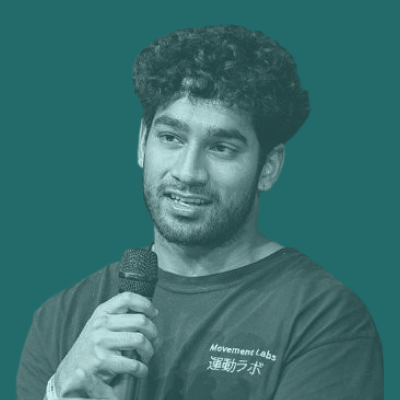
Guest: Rushi Manche (Twitter: @rushimanche)
Host: Rex (Twitter: @LogarithmicRex)
Dive into the turbulent world of cryptocurrency's first major bubble as we explore the rise and fall of Facebook's ambitious Libra project, now known as Diem. Despite its demise, it left behind a valuable legacy in the form of the Move smart contract language, heralding a new era of security in blockchain development. Join us as Movement Labs co-founder Rushi Manche unveils their groundbreaking vision to harness Move's potential in a $38MM initiative, promising both technological innovation and community support. Discover how Movement Labs aims to “make blockchain security sexy.”
Transcript
**Speaker A:**
Hello, welcome back and thank you for tuning in for another episode of the Strange Water podcast. Let me take you back to 2017. At the beginning of the year, Bitcoin was about $900 and Ether was about $9. What would follow over the next year could probably be called crypto's first significant bubble, or at least the first one that can still be seen on the max view of the BTC price chart. Needless to say, there was a lot going on, enough to 15x the price of BTC and 100x the price of ETH. But we're going to focus on one specific project that began a movement sometime in 2017, a guy named Morgan Beller began experimenting with blockchain over at Facebook. Though the party would be over and the hangover in full force in the markets by May 2018, Facebook began to take this project seriously and created a blockchain division. The first time the public got a glimpse of this project was about a year later when when the Wall Street Journal announced that Facebook was building a cryptocurrency based payment system dubbed Global Coin or Facebook Coin. The project would finally be formally announced under the name Libra in June 2019. The project itself was pretty interesting, but it quickly ran up against regulatory concerns. In the end, Facebook was not willing or able to push it through and at first they announced a rebranded slimmed down version of Libra called Diem. And Diem never even saw the light of day. In 2022 it was formally wound down and sold to Silvergate Bank. In the end, Libradiem met the same fate as so many project in our industry scrapped and sold for parts under the heavy weight of globally scaled expectations. But in our industry, failure is just part of the process. It's an opportunity to take what worked well and to learn from what didn't. In this case, Facebook left us with a resource that is just now seeing its time in the limelight. The MOVE Smart Contract Language. The language champions security through a design aspect, ensuring that assets cannot be cloned. Instead, assets are non fungible with one owner at any given time. And so, in an industry traumatized by enormous hacks and constant security threats, the MOVE language is offering an extremely compelling environment for blockchain application development. But in order to use the MOVE language, we need a move environment. Movmint Labs is building an Ethereum layer 2 blockchain based on the MOVE language in a high performance parallel execution environment. Today's guest, Movment Labs co founder Rushi Manche, is here to give us a Deep dive into the power of move and the vision. Movement Labs just raised $38 million to deliver. Not only will this episode help you understand the power of this technology, but it will also give you a glimpse into how MVMT will support their community, drive new research, and in their own words, make security sexy. One more thing before we begin. Please do not take financial advice from this or any podcast. Ethereum will change the world one day, but you can easily lose all of your money between now and then. Okay, and now. Rushi Manchin Rushi, thank you so much for joining us on the Strange Water podcast.
**Speaker B:**
Hey Rick, how's it going? Thanks for having me.
**Speaker A:**
Of course, man. So I'm so excited to talk about Movement Labs and like all the incredible things that are happening in the MOVE ecosystem and also your specifically your incredibly exciting news. But before we get to any of that, I am a huge believer that the most important part of every conversation are the people in it. So with that as a frame, can you tell me a little bit about who you are, how you found crypto and like really ultimately what drew you so much to the movement ecosystem? Sorry, the MOVE ecosystem?
**Speaker B:**
Yeah, the moving system. I'm Rishi, co founder of Movement. I've been Nerd snip since I was like 14, 15. Started off this engineering web two, worked at UnitedHealth Group as a software engineer. Just got really into like distributed systems, databases, cloud architectures and whatnot. I would say around like three years ago I stumbled across Cosmos. A family friend of mine was also a builder in space and to me was very interesting because, right, building decentralized finance systems and custom blockchains for use cases. So start engineering the Cosmos and even some solidity engineering. I think that was like in high school for me and then got a college and also was doing that. And for me it was like really exciting because I was like learning About Java and JavaScript in my college classes, even though it was super easy for me. At the same time I was working on decentralized finance applications which are actually useful. After it kind of progressed, I read this article one day from like New York Times or something that Facebook was building a programming language. And for me, like I was building Cosmos where there's like 10 users, I mean with EVM, not that much users compared to like traditional web 2. And this was exciting to me because like Facebook, the biggest consumer app, the app that all crypto is trying to get on chain is build their own program language, building their framework, and ultimately launching on blockchain to power every User on Facebook. For those unfamiliar, the DM project Facebook design to be a stablecoin for Facebook's users to interact with each other. And they built a new program language and virtual machine because they realized the current ecosystems and frameworks couldn't really scale. The SEC and regulation kind of shut it down and it spun off into two major blockchains, Aptos and sui. And I was one of the first engineers and early builders in appdos ecosystem. So here I was this like broke college kid just building a Dex on aptos. I think I post ftx. I really took a step back and was like this move ecosystem and framework is really interesting. It has all the benefits of Solana. So like high throughput realization, localized fee markets but also has security element which is kind of the main thing that gets me excited is like how do we stop the four and a half billion dollars loss every hacker attacks. So best of security and speed combined and our thesis was to bring to ethereum. And then November 2022 the movement thesis started.
**Speaker A:**
Great. So and we'll get to a little bit like in a little bit we'll get to this movement thesis and like where the opportunity that you saw was. But while we're still in the Facebook part of the story, can you talk a little bit through I guess first from like your initial like exposure to the program to what Facebook was doing. Like did you understand that as like a really. Let me just like be direct. So like Facebook is kind of like the antithesis of the things that we find interesting about crypto, right? Like super centralized. Like so much just about like entrenched powers and like network effects of like controlling all your own stuff centralized? Like was there any sort of like tension or cognitive dissonance in like Facebook building this technology that was like so critical to decentralized finance or did you kind of see that as like the beauty of the space in that like it's really about the technology and the technology, no matter who builds it will like push us in a decentralized way.
**Speaker B:**
If look at the web 2 like even like websites were supposed were like pretty niche when I started off right. There's a few groups that really pioneered it and some groups like felt like Internet wasn't meant to go mainstream. But eventually big tech came in and everyone uses Internet now. So my general thesis is like yes, like Facebook is the anti thesis. It is like a central authority. We're trying to dethrone Facebook essentially. But I don't think that's the way to approach it holistically. Right. There are certain use cases and groups that prefer decentralization, anonymous privacy and decentralized networks. Like that's where Bitcoin and user Bitcoin makes sense. There shouldn't be any kind of centralized regime controlling Bitcoin, nor will there ever be. But I think the, the principle of blockchains is decentralized compute, decentralized databases, decent decentralized systems that even big tech can leverage. And it's kind of we should usher like productivity there because that's how we get like retail adoption, actual people using it. I think if we stay too tribalistic, we're still only going to tap out like 80 users. We will never actually get mainstream adoption that we all want. So like the question I always ask myself is how do I get my mom using crypto? She probably won't use like a random in on Dex on some random one. She probably use a product built by Facebook.
**Speaker A:**
Yeah, I hear you. Like, I agree, like my mom should never will never like touching a Dex. Even touching like even touching a Stablecoin or touching the train directly. Like isn't the end game that I see. Like the end game that I see is that let's say like Ethereum or any of these blockchains, they're like HTTP right where they're used every single day, but only by like these letters. And no one understands what's beneath the hood and why that's important. They just care about like getting the job done right. And so totally with you on that, that like we can't be too precious about like our tribe and like the things that we care about and like keep out somebody like Facebook. But I gu. My question to you is like, let's rewind the clock and say that the SEC and like all this regulatory stuff didn't like shake Mark Zuckerberg off the plate and like they were still playing this game. Do you think that crypto is in a better space or a worse space or a different space because Facebook is still here versus like the actual history.
**Speaker B:**
That played out Well, I think we'd have a lot more attention and users on chain because if this DM and Libra product went into place, you have fundamentally digital currency and the biggest consumer after the world. So imagine like you're in Bangkok and your mom's in like New York. You can send money directly within the Facebook app internationally with low fees, low latency and fully secured. So I like, I think everyone wishes for that dream where payments are at speed of light. There's not that much you don't need to wear for bank wires and all the ridiculous fees that come with it. So I think it was not good and it was a really good project, but I think we can get there even without Facebook being there.
**Speaker A:**
Makes sense. All right, so let's fast forward to the movement like moment, like talk us through what the opportunity you saw was and like why you were the right person to capture this.
**Speaker B:**
Yeah, so I was doing one of the first Dexes or apps on Aptos, which is the main blockchain that spun out of the Facebook project. And my general frustration space was like it was obviously post ftx. So anything non EVM was pretty much like dead even. Like Solana was trading like $8 and people were like, Solana's going zero and most people kind of written off non EVMs. I think for me it was like, I really believe the moving system, like the language, the framework, the history. But there wasn't really a Web3 native push. It was more of like you have these two massive chains that raise a lot of money. But honestly the ecosystem community was lacking at the time, especially post FTX. Like there wasn't like the DJ and web3 native culture. So my general thesis was how do we bring this cutting edge technology from one of the biggest tech giants in the world and bring it to the web 3 culture and web the native culture that we all love and bring it to Ethereum. So that's kind of aha moment where you have the best of web 2, the best of web 3, which is Ethereum, and combine them both in one.
**Speaker A:**
Stop shop totally makes a lot of sense. And I guess we'll talk about movement, but like on the move language specifically, like, let's just spend a few moments talking about what were the innovations that Facebook brought to the table, like let's say over solidity or over any of the other languages. And like what did you see right there that like needed to be protected, that needed to be nurtured, that needed movement labs to happen?
**Speaker B:**
Yeah. So there's two main things. The first is speed. So the DM project pioneered block sdm, which is like an optimistic parallelization engine that kind of takes Solana's paralyzed VM to the next level. We won't get too technical in it, but essentially it brings high throughput, localized fee markets, multiple threaded processing all within a virtual machine. And then the second part is security. So every year I touched on this 4.5 billion lost EVM has no essential protection against that. What move and the DM probably focused on is how you do formal Verification runtime. So Move VM has a MOVE prover built into it. So essentially when a smart contract is executed, it checks for resource type and memory safety. So let's say for example there's an integer overflow in the evm, there's nothing stopping it. There's no firewall for crypto. For smart contracts, the Move VM essentially is a firewall built directly into runtime. So if any developer messes up and puts the wrong amount of code, there's actually compilers that flag and the code doesn't get processed and there's ways to silence transactions. So the combination of high throughput blockchains, like the slot, experience with the auditor, essentially runtime is essentially the most performant execution of our environment in crypto.
**Speaker A:**
I hear you life is about trade offs, right? And so like it sounds like we're getting some incredible benefits in terms of like safety and throughput. But like when I hear safety I hear also like a ton, ton of overhead. And when I hear throughput, like I hear that sounds like you're just going to need incredibly powerful computers to run it. And like both of those have kind of implications on decentralization. And so I guess my question is like when we're building in the Move vm, what trade offs like are we making? And like just more specifically like does the. Is the Move VM like the Solana VM in that? Like Solana in that it requires these like super high powered nodes in order to operate a network.
**Speaker B:**
So I'll answer the second question first. The movie itself is execution environment. So like appreciate yes, they're like hire beef your validators. It's pretty centralized and it's kind of one of the thesis why Ethereum layer 2 makes sense because you're still leveraging Ethereum security decentralization, but you bring the parallelization engine to Ethereum. So while you're sacrificing some of the speed enhancements, you have all the decentralization and kind of built up credibility Ethereum has in one ecosystem. I kind of first thing on trade offs on MOVE is it's a new program language which creates a lot of developer fragmentation because obviously all the developers, all the most like 90% of liquidity today is in the EVM. So the question is, okay, are you going to convince every single developer in crypto to write MOVE completely market over. And our general thesis is we don't expect them to. If you want to use aave, uniswap some of these blue chip defi protocols, it's probably best to stay in the EVM because there's already liquidity there, there's all your network effects. We're arguing that the future of decentralized finance, the future of gaming consumer should be built. A superior program language and kind of movement ethos which we can touch on later is actually where the MOVE evm so not only is a move rich machine, but we also support EVM code which is another main thing we kind of bring to the table.
**Speaker A:**
Yeah, and that's super interesting. I love to like dig into that um, again while we're still in this like pre moment. Like the, the other way you could go with this is like where a lot of the ZK projects are going, where they're creating like general purpose VMs and then allowing like any sort of like Rust application to deploy on it. And I guess like my question for you is like why do you think it's important that in these like blockchain computing environments we stick with blockchain native languages? Like do you see what types of applications do you see that like MOVE is going to enable that this whole like world of like we're just going to allow computer programs to have commitments and then somehow now they're blockchain computer programs. Like what do you think is being missed there?
**Speaker B:**
Yeah, so my running joke is like everyone wants to bring Facebook on chain, bring like social consumers apps on chains. So my question is why don't you use the language that Facebook themselves built? Right. So the long term playbook for the movie system and general language is to be the flagship hub for smart contract development. In terms of social consumer. If you want to build gaming then I can have to use the built into language itself which enable for upgrading of trace at will, which solves all of the state issues we're seeing with evm. For consumer apps you have like traits built into the language itself. It's much more intuitive for newer developers. The way the language is designed is if you're like a web developer, you know Rust it's very easy to pick up move for example writing account checks, which is one of the biggest things. When you're building a DEFI application it takes about 10 to 15 lines and move and the SVM it takes around two pages. For the EVM it takes like days and weeks. So the velocity of production to make consumer or any kind of apps is about like 90% quicker, which helps like new developers come in. Like when Zuckerberg built Facebook he was in his dorm room and I was able to push a project in like three weeks. That same project can't happen today in crypto because is a big financial incentive. If you rush a product, you're probably hacked, you'll launch and lose all your users in a week. So that's why security and performance really important. So Move kind of enhances that and kind of work that we're doing is bridging over both lines because currently you have a lot of sleep developers. The question is how do you go to market for them? And that's why the EV interpreter, whatnot.
**Speaker A:**
Cool. So let's talk about what MVMT is and I think that like you know, as you said, we've got like now a couple of years of of history to it and I know that through that history we have an Avalanche chain and we're talking about Ethereum L2s now. So can you talk us a little bit through what Movement Labs is with walking us through the history of what you've built so far?
**Speaker B:**
Yeah, so we started off like post ftx. There's pretty much only three systems where you could do a Rust based vm. This is before all the ZK VM stuff really came to market. It was Avalanche, Cosmos and Polkadot. Cosmos was a bad choice for us because it didn't have a centralized ecosystem. It was really difficult for any kind of network to be bootstrapped at the time. And then Polkadot wasn't in the best shape of time. So it kind of led us to Avalanche and then from there we really fell in love this idea of EVM liquidity to move and ultimately wind up on this movement L2 thesis. So what movement is. It's a first move EVM layer 2 on Ethereum we're using ZK fraud proofs right now as a main role architecture with plans to eventually have our own validity proofs via custom built ZK move circuit. We have our own shared sequencer which is M1. So the valor is part of the shared sequencer sequence, the layer two as well as a layer to the network. So similar to the Optimism playbook where Optimism has a main defi chain, the Optimism chain which is RM2, they have the super chain which is a shared sequencer for M1 and then OP stack which is our move stack where anyone can launch their own rope to connect to the network.
**Speaker A:**
Can you? So I like love that you eventually like landed on an L2. I think that's the right move. But I think what's really cool about your story is that you spent time in the Avalanche ecosystem and I think that like you will take away Lessons that like most people that just like come to Ethereum and stick to Ethereum will never like experience like basically the echo chamber problem. And so I'd love like, do you have any like insights or takeaways that like you took from building first an Avalanche subnet that like really informs the product that you're building today?
**Speaker B:**
I think the community is pretty like vibrant. Like one thing I realized like this is peak bear market when price action was not doing the best for Avax, even Solana. First of all, the team is very supportive. We were two random college kids with no track record, no background, no like rise or fame. And they really took us in, helped us out, was on weekly calls with us. So they really cared about its builders and the community was supportive. So real bootstrap of early users, early kind of believers from the Avalanche system just because people believed in them. I think like it was a good, if we're seeing like 0 to 100, it was a good 0 to 20. But we couldn't scale beyond that because liquidity concerns also we need to be our network. There's also the whole subnet thesis which I'm not sure how that's playing out, but yeah, I think it was a good lesson to be around people who really cared.
**Speaker A:**
Yeah, I do have a lot of questions with how Avalanche works in the subnet thesis as well. But so can you talk us through this transition? What was the moment that you realized it's right to pivot to Ethereum L2 and from your understanding in that pivot to Ethereum L2 what were the things that you were gaining and what were the things that you were giving up?
**Speaker B:**
I think some of the things they're giving up is the original architecture actually was move L1 so going to compete with Appetisense in the world. I think what we quickly realized is the market doesn't need another L1, especially in the move L1, right? There's already two big L ones are well funded. They already had a Greek system. A move on evac subnet would not be accomplishing a new user experience. There was no market to be met. Whereas when we looked at move L2, a clear market to be met, right, you had a next generation virtual machine with Ethereum users and Ethereum liquidity. What we realized quickly is that like Ethereum users love to stay on Ethereum and they won't really migrate to change. So to do that, go to market to bring MOVE as prevalent as possible, it couldn't be an avalanche, it needed.
**Speaker A:**
To be on Ethereum And I like to think that one of the most brilliant parts of the L2 thesis is, like, sure, we can talk about it from, like, blockchain scaling or, like, any of the, like, nerd things, but, like, just from a marketing standpoint, like, the LT thesis has allowed everyone to, like, build projects on Ethereum and, like, users to move into those projects and still call themselves Ethereum Maxi and Ethereum Aligned. And so I think, like, that's what's really cool. By Moving to Ethereum L2, you can capture all these people that are interested in the technology you're building, but, like, without forcing them to, like, make like, identity changes in, like, who they are and what they believe in in this space.
**Speaker B:**
Exactly. I think obviously we're in a space where it's pretty tribalistic. So you have those people who love Ethereum will kill for Ethereum. And if you're trying to bring a new execution environment, that already is a big challenge. And if you force them to leave Ethereum, they probably won't. So I think you pick your battles and we'll stay on Ethereum, we'll cater to you, but we're going to present to you an alternative to the evm.
**Speaker A:**
Very cool. So as of today, talk to us about what movement labs, what the product is today. Are you, like, launching this L2? Are you entering into a testnet? Just talk to us a little bit where the product development is.
**Speaker B:**
Yeah, so today the product's mainly focused on the move L2, starting off with bringing the execution environment to Ethereum. We're on Devnet right now announcing incentivized testnet over the next two or three weeks. So super excited to have people playing around with it using different apps. We built out a pretty successful system of native apps, of move apps, of EV maps, so that should be ready for people to use. Yeah, pushing it forward to Maine over the next few months.
**Speaker A:**
And so, like, as you said from your experience in Avalanche, like, the big takeaway that you got there was that a vibrant community and a supportive community can make up for, like, a lot of things that might be lacking, like, let's say, price action or tvl, that kind of thing. And I think that, like, that's a great lesson for, like, projects that are just starting off, like, for example, a brand new L2. And so I'm wondering, how do you think about, like, creating a, like, vibrant community in which, like, young college kids like yourself are, like, interested in, like, trying something new and, like, feel supported by, by you guys and by the other teams around You I think it.
**Speaker B:**
Starts off with leadership. So like one thing that we particularly do on Cooper and I is like we're in the discords, we're talking to the builders. We're doing a lot of the founder led BD just so people can like understand the vision directly from the people who inspire the vision. Right. I think a lot of times in crypto it's like the foundation give a web two in corporate. So if I'm a random builder, I don't want to get in touch with leadership. I don't get in touch with people who are really passionate about vision. So I think it starts from a top down perspective. Being humble, from a founder perspective, going in the grassroots creates an ethos that like you are welcomed, you are wanted and this is a community initiative. I think it also goes to show how you present yourself on social media. Right. I think one issue of other ones in the past is they came off to corporate and there's a lot of bureaucracy to get to building. Whereas we're in discord, we're in the telegram groups. It's pretty easy to get in touch with us and build on top of us and get developer support as well as how we do grants, distribution, making sure that tokenomics are also that can.
**Speaker A:**
Be joined and, and like are there like are you looking into directly creating programs and pipelines to like, like are you doing some sort of accelerator model? Like again I, I think in this industry like the hardest thing to do is to get people excited and get people to feel like, you know, past that level of support of like oh these guys like care about it on Twitter. But like when I'm trying to build my business, like why would I put my bet here versus somebody like Avalanche who like you know, has like a bigger name or like somebody like Solana who has like more momentum. Like what are, how are you going to like differentiate the community and like the resources for people that want to build?
**Speaker B:**
With move, I think the first step is unlocking new use cases to presenting to the market. Like why you're not just in the EVMO 2 right. I think this the market saturated when there's like 800 EVMO2s and each L2 just vampire attacking each other and retain predatory devs. There's actually no net new value creation because the same developers and users are hopping change to changes to Airdrop Farm or just to get the token allocations they want. Right. I think the first thing that we're doing is like look, we're category leader in terms of next generation Environments on top of Ethereum you can do things like gaming a consumer that you couldn't do on EVM because the chain quick like simply couldn't handle it. I think inscriptions like the best use case I sign like obviously it's not a use case but most EVM chains went down during inscriptions. Zksync and Arbitrum both tapped out at 100 TPS, which shows that sequencers can't really scale. Avalanche had gas fees of over $500. Ethereum itself was unusable. So there's a clear like whether it's actually users and volumes on these major EVM chains they simply cannot scale. And for users or developers that are trying to build on chain gaming or even like order books that need high throughput, you can't have single threaded machines. So prison that narrative market as well as the security side. Right. If you want to build a defi app that's not getting hacked for billions of dollars, you have to write in a program that's programming language that's formally verified. So combine those two elements of hey, we're the fastest blockchain in the market. We're also most secure blockchains in the market. You kind of get a unique use case to present market. And the second thing is just how you do your social media marketing presenting as a very grassroots effort that if you're coming to community you're going to be welcome and support by community. Um, and yeah, I think we've done a good job with combining both of the technology as well as like a degen community first initiative.
**Speaker A:**
So let's talk about applications, like what are the most exciting things happening right now like in let, let's start with like the whole move ecosystem. So if you're looking at aptos, if you're looking at suite, if you're looking at like some of the people that are early in movement and like understand what you're building. What, what is move unlocking for like builders and and like yeah, what is MOOV unlocking that we haven't seen in EVM or in SVM or like in blockchain today?
**Speaker B:**
Yeah, I think like I touched on like the process of having fully formally verified apps. So a lot of like these major like look at funds, family, office and users could never really get insurance back collateral because of smart contract risk. So if I have like thousand dollars eth or even scale up like a million dollars in eth, I never felt comfortable deploying capital into an EVM blockchain or EVM app because the smart risk was so high even the most blue shift defi protocols like Curve K most recently munchables on blast like they present so much smart contract risk. So that for any capital deployer it doesn't really make sense to do that when you just hold it in like a cold wallet or not. I think with move you can stop 90% of attack vectors with move prover. So it provides a much more secure execution environment where if you're looking to deploy capital on chain, it is the most secure way to not only deploy capital but also to earn insurance. So all the work that we're doing is a obviously bulletproof in the vm, a sequencer, but potentially partnering with insurance providers. So imagine deploy Ethan chain in the past insurance premiums were so high because market risk there's never actually a good way to get insurance. Imagine a world where you can deploy eth on chain, it's fully formally verified. So the insurance premium is much lower which actually incentivizes more capital coming on chain and a lot of it go to market. BD which are announcing shortly is we have all TV up commitments from funds that never felt comfortable in the past and now can deploy funds into users. And defi apps can actually mark that as like we are the most secure yield aggregator, we're the most secure dex. And then on the speed and performance side, like I think obviously consumer gaming, it's a language that Facebook built to build Facebook on chain. So if you're building a gaming app or social app, you need a lot of asset minting in the EVM. You're constantly minting and burning NFTs each time we upgrade state. So for example, like Defi kingdoms broke harmony, then they broke avalanche, so they needed their own chain. So with move you actually don't really need that customized state because you have a parallelized engine. So if you have one crazy event on one thread, let's say you have inscriptions event, it doesn't affect uniswap. Another thread is an effect your game on that thread. So you can actually have multiple threads within one chain instead of being like L3s, L4s, L5s.
**Speaker A:**
And I feel like this like paralyzed VM is kind of like the hot topic right now. Especially with this latest like monado raise of just some ungodly amount of money. Can you talk through? I guess first of all, like what actually does parallel parallelized VM mean? Like how is that maybe like different from our general understanding of like the evm? Or just help us understand when people say parallelize parallelized parallel like, yeah, whatever, whenever they say that, why is that important? And then can you kind of compare and contrast like these different implementations like Solana, like Solana Monad, move like these all like claim to have the same technology. But help us understand like what are the specifics that like make these technologies different.
**Speaker B:**
Yeah, so the evm, if you look at it kind of execution environment, it's single threaded, which means you're waiting for transactions to occur sequentially. So if there's 100 transactions happening, A to B, B2C, you're waiting for each transaction to happen after each thread. So that's why like transaction times are longer, they're more expensive. Typically when there's not a lot of volume in that work, it doesn't really matter. But when you have high volume, events such as like a purpose market or a game actually cost a lot of state congestion. Most chains tap out at 120tps, which means gas fees get really high. So let's say for example, like GMX and Arbitrum. And when GMX goes crazy in terms of volume, Arbitrum as a chain slows down because it's only one thread processing all these transactions. Imagine like multiple threaded processing. That's what the Solana VM move. VM brings the table of parallel execution. So instead of waiting for A, A to B, B to C, C to D, you're doing A, B, C, D all in conjunction each other. You're not waiting. So it's like asynchronous execution, that's one thing. The second thing is the concept of localized fee market. So because there's multiple threads, like the touchdown, if you have one high event action. So if you have like let's say a game going crazy, a lot of users on one game that's on one thread and they can uniswap another thread. The user experience on the Uniswap isn't changed because it's completely different thread. So because you can isolate state to different threads, it allows you to manage state much more effectively. So that's how you get these random numbers like 10,000, 20,000, 30,000 TPS. Honestly, that's more of a marketing term. Solana right now is topping like 2000 tps, which is pretty good. It'll probably push like 5000 within the next few weeks and few months. But yeah, the concept of executing transactions asynchronously with multiple Fed environments enables for high execution, which is much needed today.
**Speaker A:**
But so this is predicated on the idea that the parallel transactions that you're running are Completely independent of each other. So your GMX example, you have this perp market that's creating a ton of activity and then maybe on Arbitrum as well you would have this, this like brand new NFT mint and that's causing a bunch of activity. And in a serial VM like they both like need to happen one after another. And so like everything is super expensive in a parallel vm. Like they can handle separate. They can be in separate threads and not affect each other right. But it in blockchain like the. The whole point is that this is a shared space and like just like let's be really simple. Like I can't imagine how in the Ethereum world like we basically every transaction in some way needs to touch the price of eth, right? And so like how can we run these like parallel transactions when each transaction affects the price of eth which affects the next transaction which like ultimately like by. By how do you. Are there major choke points that like that parallel VMs still are limited by in the same way that a serial VM is limited by.
**Speaker B:**
I think there's a few security assumptions that have been explored. Obviously Solana is having downtime issues with the consensus and how they're handling different nodes but I think that's getting fixed. I think the point ETH doesn't really matter as much because if you're using gas feed denominator eth for example movement the gas fee at least to start will be eth. So you're doing a transaction in ETH and Oracle is updating that in real time. So it really comes down to how quickly the latency with Oracles which today has been pretty good. So I think it works like generally the same as Arbitrum optimism in terms of each price action. I don't see that being concern. I think if there was any bottlenecks to parallelization is like it gets tricky for certain applications because in Solana it's not obviously parallelization like developers have to actually manually handle the trace between different parallelized threads. So developer experience in Solana isn't always the best kind of benefits of block STM is the optimistic optimistic casation. So the engine actually handles how transaction workflow is handled. So let's say for example my game is doing a lot of volume and there's another thread with Uniswap in Solana that because there's no optimistic parallelization this on more the developer to manage kind of the trade offs. Whereas in the move VM and block STM powers like what Monad is Doing that's kind of handled within the state itself.
**Speaker A:**
Got it. So it sounds like like, you know, parallel processing is not a new concept, right? Like that has been. We solved that for like hardware processors for VMs long time ago. And it sounds like we can totally have this kind of technology, whether it's in Move, whether it's in Solana or even if we wanted to apply it to the EVM like in Monad. And the reason that they like originally didn't put it in the EVM or in the BIT VM or in any of these like blockchain environments is like to make the trade off on decentralization and to keep the node requirements super low. And what the trade off that all of these paralyzed VMs are making is, hey, whether we are going to make different decisions on decentralization or we're going to rely on Ethereum mainnet for the trustless properties, we're just going to soup up our computers enough to have like the processing power to run parallel VMs and then like leverage like all the benefits of this like very modern technology. Is that right?
**Speaker B:**
No, makes perfect sense. I think like McLana kind of pioneered where like we were sacrificing decentralization for speed. I think that's where this like next gen L2 narrative kind of makes a lot of sense because you're still retaining the sovereignty and ethos of Ethereum decentralization, but you're bringing performance specs to it. Even like the core Ethereum people are like, we love Ethereum as a principle, but the EVM is really difficult to work with. Solidity is really difficult to work with. If you talk to Nick from Fuel, he's actually like one of the early Ethereum and EVM developers. He was on the calls when solidity was being developed and now he's building Fuel, which is essentially a new paralyzed VM on top of Ethereum. But even the Ethereum OG people are recognizing the faults of EVM while they're building evm. And even Vitalik recently called for parallelization for layer twos.
**Speaker A:**
So let's talk about like the layer two that you're building when you're building like first of all, how important do you think it is to have shared sequence to distributed sequencers for an L2? Is that something that you're building for like the movement L2 in that, like so that you can make guarantees that like the sequencer that you're running, if it ever goes offline, like you'll still have uptime and liveness or do you Think that like that is kind of like a nice to have. That's not core to what it means to be at L2. Like how do you think of decentralization at the sequencer level?
**Speaker B:**
Yeah, I think the future is decentralized sequencers for arbitrum, optimism based, already making a lot of money on the sequencer, so not incentivized to decentralize it. They've just declared they're going to do it eventually, but no one really knows when that is going to happen because they're printing money. Of these sequencers, I'm generally bearish on the B2B shared sequencer place. Like the groups that are saying we're going to integrate with a bunch of roll ups. I think that's really difficult because ultimately an ecosystem itself needs to pioneer the shared sequencer or decentralized sequencer because you need volume. It doesn't matter if some random roll up uses a decentralized sequencer if there's no volume users and gooder market around it. I think that's why we're approaching it. Even like all These next gen L2s are really focusing on is a. We need a decentralized sequencer because we have a paralyzed high performance vm. So centralized sequencer won't scale, the performance won't scale. We want to guarantee uptime even if that node goes down. So from pure performance point of view it's very important. And the second thing is also tokenomics, right? Most layer 2 tokenomics are essentially meme coins and discoverance tokens. There's no actual utility there with a decentralized sequencer. Ultimately a shared sequencer dollars can actually participate in the sequencing. You actually have more decentralization because if I'm running a node for let's say arbitrum, it's decentralized. I can stake the ARP token or in this or our case stake the move token to participate in sequencing and earn sequencing fees for the network. So if I'm a huge like movement fan, I can run my own node, stake the token and get the fees generated from layer two as well as other layer twos in the network. So that brings me to the third point where these shared sequencers enable kind of a network of blockchains beyond layer two. Kind of the benefit of the optimism ecosystem isn't optimism anymore. It's base their biggest client. So we envision the future where there's going to be a bunch of rollups. We envision a future where movement itself itself may not be the biggest rollup there may Be like AI roll up or a gaming roll up that has more volume. We want them to be connected to the major ecosystem via shared sequencers as easy liquidity transfer. So the combination of those different things make it sense for us to do Daisier decentralized sequencer.
**Speaker A:**
Yeah, I. So first of all in your head is shared sequencer and distributed sequencer. Is that like two sides of the same coin? Is that the same technology?
**Speaker B:**
No. So it's decentralized sequencer which simply means there's multiple nodes taking part in sequencing network. Shared sequencing is. We have multiple roll ups connected network. So for our mainnet purposes we're starting off decentralized because there probably won't be another movement roll up until main nets. Once we have one or more new rollups joining system, that's when it comes shared. So shared sequencers, two more than one rollups. A decentralized sequencer is multiple nodes. A shared sequencer is decentralized, but decentralized sequencer is insured.
**Speaker A:**
So in this I've been thinking a lot about shared sequencers and I've heard Ben Fish from Espresso talk about it a lot and I think like when you're, when you're sitting in this like the sequencer, the node operator seat, like it makes so much sense that like, oh, I can sit here and see all this different order flow across all these different chains and I, because I have this unique perspective, I can create transactions and extract a ton of value for me, right. Like my question is always on the L2 side, which is like, why would I want to opt into a system where like there is a huge amount of value that is like extracted out? Because we have this like this connection to another ecosystem that I don't even care about. Like put another way, like base might be looking at what's going on now and say like huh? If like, if optimism had a shared sequencer and like we're able to extract a ton of MEV out of our ecosystem that just sucks for us. Like why would we allow that and not just spin off into our own system? And so like do you have any thoughts on, on like the tension in, in shared sequencing and like does it make sense for all parties involved or is this something that like really still needs to be thought through and worked out?
**Speaker B:**
Yeah, I think like this is where dual seeking gets really exciting and what we're working on as well. Because yes, if it's single staking, single size staking, then why would base give up its clearly brilliant business model and sacrifice that to optimism super chain unless there was huge financial incentives. What dual staking, and this is probably what Optim is also working on is these validators are sequencing both optimism and base and the movement and other roll ups are dual staking validators. So you stake the op token and the future hypothetical base token within the same node. So within movement the validators take the move token, but if they want to sequence another roll up, they also stake the given rollups token. There's a few other groups like Ethos that are also working on this skill staking approach. But with that approach you actually have baked in economic incentives. Because if I'm a roll up, I'm actually obliged and I'm interested in connecting to a shared sequencer because my token sells value accrual. I'm still staking the token, there's still buy pressure for the token on the node. I don't have to worry about the hardware requirements. I don't need to worry about the user experience or the developer experience of running a shared sequencer. There's a developing group or handling that. So let's say for example my game roll up, I want my token to have staking value. I want to be ethereum, I want realization. I will stake my token part of the movement share sequencer, not worried about the 10 development experience and still get the fees and buy pressure that I want part of the tokenomics model.
**Speaker A:**
But don't you worry that by opting into that so that you get some fees and a little bit of buy pressure, you're essentially opening up your waters to the sharks of every other ecosystem. And I'm talking specifically about MEV and.
**Speaker B:**
Mev I think because there are obviously all the bots kind of looking for which chain has a more return. I think validators can do cool stuff where maybe for certain nodes you shut off dual staking. I think it gets tricky because no one really explored how MEV related to shared sequencers because there's not a single live shared sequence live in production. It does get tricky. It's something that we're working on. I don't think I have a straight off answer for that yet.
**Speaker A:**
Yeah, well I definitely encourage you to like go look like this is all Expresso Systems talks about. And again they talk about it from the sequencer side which is like look at all this MEV you're going to get. And I'm thinking like maximal extracted value. Like that sucks for the L2 and the people in the ecosystem. And so again that's, that's something that I really struggle with like in this like future that we're going into this world of 10,000 roll ups is like the reason that we're creating roll ups is to have a sovereign space and like with shared sequencer, are we taking out the sovereignty? Like we're, we're bringing back all the worst parts but without like with just like pretty minor benefits.
**Speaker B:**
Yeah, I think like ultimately like optimism there'll probably only be like 2, 3 major chains. So don't imagine the mov, at least for the short to midterm being that ridiculous. I think if you can have monitoring built into validators so we can shut down MEV bots, that could be interesting. But I'll have to take a look at that. Maybe it's something that we think about.
**Speaker A:**
Very cool. So I think now is a good time to pivot to talking towards the future. And I'm so excited and so proud of you. Just last week you announced this incredible raise. So first of all, congratulations. Any good war stories or like tips on like what it took to get there?
**Speaker B:**
Yeah, I mean we started off, the fundraising is pretty difficult because we had no brand name. We were two college kids in a dorm room with like 50 bucks in a bank account. So like most VCs investors pass them first look because this was post FTX and anything that wasn't bulletproof was a flight risk. So we got like a thousand no's before first. Yes. Which is like a 21, like a 20 year old kid turning 21 wasn't the most fun thing to do and obviously a lot of mental issues. But I think like that kind of taught me a lot of a, like how the market wants how you fundraise, how do you build momentum? I think that experience led to kind of our success because we failed so many times and stuck through it, me and my co founder. A, we built like a bond that is like a lifelong bond now and then. B, we learn a lot of skills that showed grit today. So even today like our team is pretty disciplined. We're a pretty tight knit team, humble down to pat. We were Never like the PhDs, the rockstar Facebook guys. We were just two scrappy kids. And the team that we sampled was pretty scrappy as well.
**Speaker A:**
Nice. Well again, congratulations. And man, that's a big round and like a very exciting thing. So like again, congratulations. I would love to talk like what, what do you want to do with this money? And like really what does the future of like movement labs look like in you know, the, the one year time frame? Sure. But like really in the five and the ten year time frame.
**Speaker B:**
Yeah, I think like the main number one use of money is like community building. Whether that's like we look at APAC as the biggest market for us obviously move is pretty big in Korea with the work that aptos is doing. We're pretty close to the aptos team and plan on working with them pretty closely there. So that's expansion Korea. Sorry, there's some background noise. One second should be gone now. Yeah. So we plan to do a lot of work in APAC region where bringing consumer apps and gamers to Korea. So hiring a big APAC team. We're also hiring team. So to me P verification is very important. How do you blow up for smart contracts and put form methods into programming programming. So we're hiring a research team as well to really look at execution layer like the sequence level, discuss the mev stuff that you bring up which is a fair point. I probably need to do more homework on that. And I think just generally we want to empower builder so we already have three products that close and raise rounds which we've been helping with the cap table there, hosting events, hackathons, driving developer adoption. But I think we really want to make sure the funds that we raise are going back towards the community. So if you're a builder please reach out. We have a lot of grant programs and incentive programs and the main kind of capital we're pointing towards the next few months is towards community.
**Speaker A:**
Very cool. So I'd love to talk a little bit about what it's like to build in APAC and just like definitely cross cultures and so sorry, I don't mean to presume but I think you're American or like at least you have like raise money from America. So can you talk a little bit about what you're like the big takeaways in terms of like cultural differences between like the two crypto markets, the Western and the Eastern. And like what does it mean to like bet big in Asia? Like how do you make those bets? Like how is it different? Like talk to me about like when you say that Movement Labs is going to go big in Asia, what does that mean?
**Speaker B:**
I mean we're a western team based in San Francisco. I grew up in New Jersey, New York and Nashville most of my life, so never really explored a lot of Asia. But I think like especially in crypto where the States isn't the most adoptive place of crypto and policies, Asia has really blown up for it. So Singapore, Hong Kong, Korea, emerging markets that are really accepted crypto put great policy. Singapore is really pushing forward it. So we're seeing a lot of good usage and driving from governments. And on the consumer side, things like anime and consumer avenues are much more crypto friendly. So the best example is like Skplan in Korea. They're very pro crypto. It's the biggest kind of telecom company in Korea and they have their own blockchain, they have their own collectibles on chain. Their users actually want to own assets on chain because it's part of their culture. I don't want to speak for them because I'm not from the community. But one thing that we're really focusing on is hiring the team that does so. So we just made a few key exciting hires. We're excited to announce that know what to do in Korea, Southeast Asia, Japan, regions know how to rally users, developers, customers and even like capital. I think Asia's kind of growing up to be like the capital hub for crypto in terms of native eth, Internet, bc. So when you're looking at how do you grow the TVL of a chain, all that capital is coming from Asian markets.
**Speaker A:**
You know, I, when I was in like undergrad, I one of my summer internships, I was a development intern for Riot Games and I'll never forget I was talking to like my dad, like knew about Riot Games and they, so they do League of Legends and they make like untold amount of money by selling skins for the characters. Like you can't buy new powers or like can't become more powerful. Just the skins. And it just blew his mind that like they're able to build this company for people buying nothing. That's what he would always say, like, they're buying nothing. And I, you know, to me that was just like, no, they're not buying nothing. It's just like we, we live more of our lives online. Like every single day we live more and more of our lives online. And it makes sense to me that like, as we put our identity there, we're willing to like spend money there and for all the same stupid reasons that we spend it out here. And I think that something that Asia is just like so far ahead of us on is understanding that like this line between like the online world and the offline world is like really arbitrary and just a reflection of how new the technology was. And like the fact that online didn't exist even 20 years, 30 years ago. And so yeah, I do hear you that there's just this like, this ease of like getting people to Understand digital property. It's much easier in Asia. And I guess like the other side of it too is it's not just like the culture, right? Like, there's more regulatory frameworks, like, businesses are more willing to get involved. And I'd love for you to talk a little bit about that piece. Like, what's it like working outside of the US and outside of the west, where instead of like, you know, businesses looking at our place and actually running away in fear like that, people are embracing this technology as like new capabilities and new things that we've never done before. I mean, what's it like on the B2B side, building in Asia?
**Speaker B:**
Yeah, I think, like, generally it's much more collaborative and there's more application teams. So the states is really good at infrastructure. Obviously VCs and kind of leaders in the States with offices like New York and San Francisco, but it's not application buildings because the users aren't really in the states. The users for crypto, when it's consumer gaming, like even mobile games, or like mainland China, Korea, Japan, these are where like the crypto games like Axie Infinity saw a lot of volume and even going on to a topic like airdrop farming for states, like, you think you're like a $5,000 airdrop, it's like cool. Like maybe that's rent for one month. And like Indonesia, you just fed like your family for a year. Right. So that $5,000 goes a long way. So, like people in like these parts of the world really love crypto because they can fundamentally make a living off of it and like participating in networks and governance and all these things are very important to them. So I think for a B2B player, it's like we see like the next wave of apps. Like, I personally think the biggest consumer app in crypto will come from Korea. I think the biggest, like users in whales are starting to form in terms of Asian markets. So we do B2B. I think it's like part like building infrastructure probably in the States, like developer talent, obviously Stanford as one of the best research arms in the world. That's probably going to stay the way for the next few years. But the users in the category market is very important to have in Asia because that's where the buyers, that's where the user is, that's where the app builders are. So the best of both worlds is kind of how we approach it.
**Speaker A:**
And then I think last thing before we got to cut this off, just timing wise, but you talked a little bit about how you want to spend this money that you just raised on research. And so my question for you is, like, what are the buckets of things that like, you find super interesting in terms of research? Like, and, and where are the opportunities that you see for movement to push this space forward? Whether that's in the move language and like blockchain/l2 architecture and just like social paradigms? Like where. When you say you want to spend on research, where is that?
**Speaker B:**
I think our taglines try make security sexy again. So you have like a lot of security groups, like auditors that have pioneered security for the last decade or so, but it's always been like a B2B thing. It's always been an afterthought. It's like, yeah, we're going to build this cool tech and maybe we might secure it. And oftentimes we don't and it gets hacked and we're like, okay, crypto is so used to the $50 million hack that it's like, oh, it's still $50 million, when in reality, if I told my parents that my app got hacked $50 million, they would freak out and never use it again. So I think that's one of the biggest barriers to adoption in our industry. It's like from our inner circle, these hacks are normal. From an outer circle, it's like, we're not going to touch this thing until it gets it figured out. So we really want to position ourselves as leader in terms of infrastructure security, making security part of the ethos and building into the runtime. So the key main value proposal verification. So how do you build rules, build VMs and sequencers that are resilient to hack attacks. So we're hiring a full research division, dedicated form verification, whether that's bulletproofing, the EVM side of the virtual machine for stacks so we can disable re entity and all these other issues. What gets me excited is the SQL Server monitoring. So I tweet a lot about this. Like, everyone argues that censorship is bad, right? We're trying to build censorship resistant systems. There's a world where censorship is actually good. Or sequencer that can monitor mempools and stop hacker attacks and actually hopping. So if you have a bad opcode or overflow or some kind of issue with the mempool, you can essentially monitor transactions. Like, this transaction is bad. Let's make sure it doesn't get executed. If your order book roll up, you can geo block certain kind of users who are portrayed by actors and intentionally do that. So there's actually a World where you can turn on censorship within sequencer. So if you're launching a custom rollup, you can have built in security from the VM level as well as sequencer level. Um, so yeah, short answer is we want to make security sexy.
**Speaker A:**
Yeah, no, and, and that I love make security sexy again. That's very good. But like can. So when you talk about a lot of verification in my head, like in my echo chamber, what that means is a lot about ZK technology. And I'm wondering does like how much when you're building movement labs, like how much are you touching zk? How much do you understand that to be a part of like the stack that you're building and basically the stack of blockchains in the future?
**Speaker B:**
Yeah. So I think the end game is to eventually have fully ZK move vm. I think current proving costs are pretty high. Even if it's a set per transaction, it's pretty problematic for us. So I don't think infrastructure is ready for fully paralyzed and next generation zero knowledge version machine. So the way we're using ZK is the ZK fraud proofs as part of the roll ups. We're not building in house. We're partnering with ZK providers that have already spent a lot of research into it. So I think the short term ZK proofs but eventually kind of once we have a stable environment looking to migrate to a validity proof network with their own marketplaces and whatnot.
**Speaker A:**
Well, I guess like taking a step back like my question for you is when you're talking about security research, is that about cryptography and about like not even the verification on mainnet of like the, the transactions that happen on the L2 like the, the fraud proof paradigm. But I'm talking about just within the movie and itself. When you're talking about like increasing security, is that a story of cryptography and a story of like creating better tools that provide mathematical guarantees or is that more about systems architecture and building like safe paths and like the right kinds of checks? But it's really much more of like an analog and a non cryptographical branch of research.
**Speaker B:**
I think it starts off in the latter where it's like you're just bringing rules to environment. So if I'm a random developer, for example manage integer overflows, there's no account checks in the EVM bringing those account checks the sequence level and the execution level. So it's like if I am deploying fraudulent code or code that I missed up on, there's account checks and system checks into runtime that can run the slides, not deploy bad code. But I think long term it is like, how do we build the best decentralized network with our custom provers, custom cryptography. So if I'm deploying smart contracts, maybe it's like we're able to encrypt it, have some privacy in it. But don't think that's a short term focus for us. I think there's other teams that are better suited for that and we'll look to partner with them, but I think that's more of a long term thing with us.
**Speaker A:**
Awesome, man. Well, I really appreciate it and I'm really excited for the future that movement is going to build. I think you're so right to like just look at the state of blockchain and realize like Ethereum is like something special and something precious. And it also like totally sucks to actually use and build on. And I do think the right way to, to like push blockchain forward is not to launch another L1. Like if, if we. All we care about is computing, like, why are we bothering with any of this? Like, let's just go build like financial apps on AWS and call it a day. Like the, the special thing we have here is the shared space. And the question for builders is how do you improve the shared space and not like, how do you just burn it down and start over and hope that everyone decides that your space is the shared space so could not be more aligned with what you're doing and like how you're getting there. And man, just thank you for, for sharing it with us.
**Speaker B:**
Thanks so much. Thanks for having me.
**Speaker A:**
Of course. Before I let you go, can you share with the audience just where they can find you, where they can find movement labs? And we talked so much about how like you guys have really embraced the importance of ecosystem support and just like vibes and the ecosystem. So can you tell the audience where they can find you, where they can find movement and if they want to get involved, how should they get started?
**Speaker B:**
Yeah, Twitter is moving labs xyz. There's a link tree in the handle that has our Discord. We're pretty active in Discord. Have a lot of fun memes and community initiatives in Discord. It's pretty active. And then me personally, it's at Rushimanche. R U S H I M A N C H E on Twitter. Feel free to DM me. I'm chronically online, chronically bull posting, posting. So feel free to DM me there. I think journalists, like, we are a team that wants be reached out to as well as we'll reach out to you. So if you have any cool ideas, go ahead, ping me. Ping anyone on the team. We're all yours.
**Speaker A:**
Awesome. Well, Rushi, thank you so much. I'm so excited for you. I can't wait to see, like, this. This from last week on is like the era of movement labs. And I can't wait to see, like, what comes from that. So congratulations, good luck, and have a good rest of your day.
**Speaker B:**
Thanks so much. Thanks for having me.